
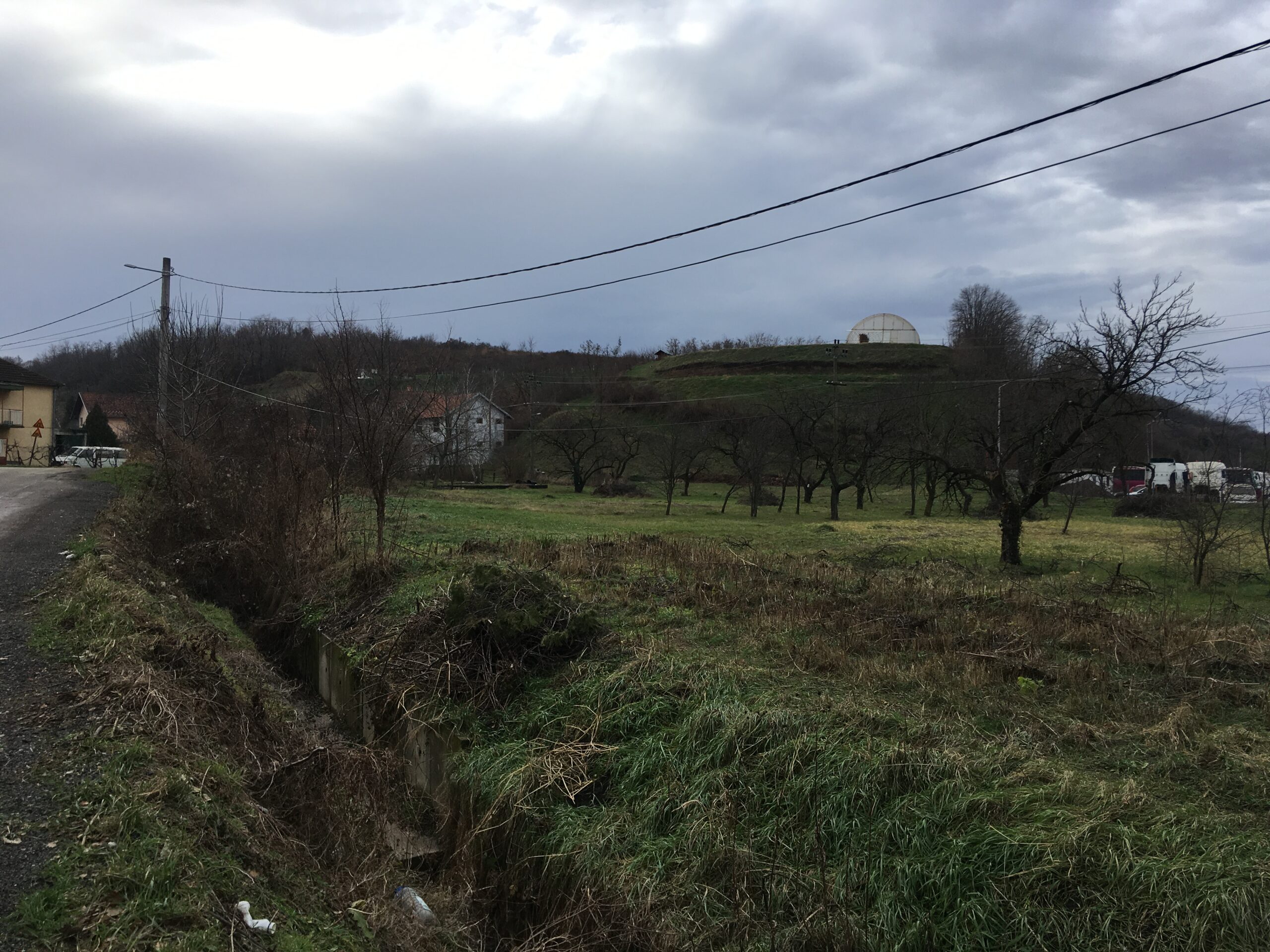
Beočin Vicus Josista village, villa rustica and tower
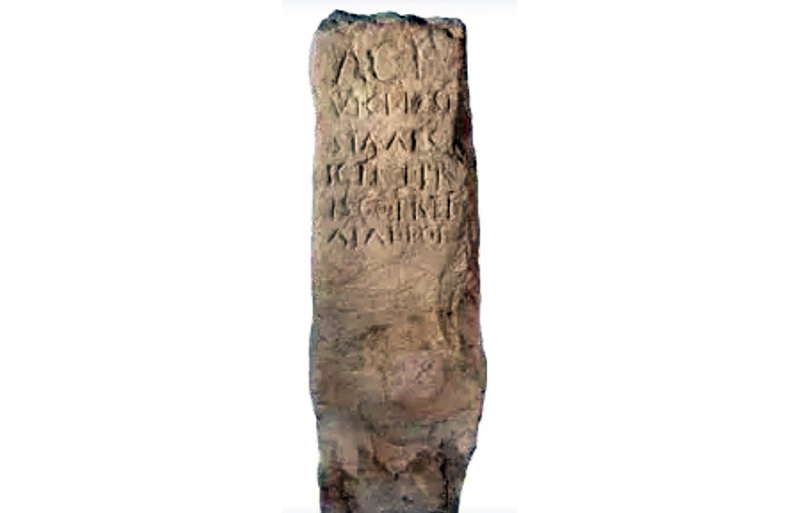
In the atar of the village at the beginning of the 20th century, several finds from the Roman period were discovered, the most important of which is a stone find – međajash, on which is carved the inscription of the Roman name of the village – Josista.
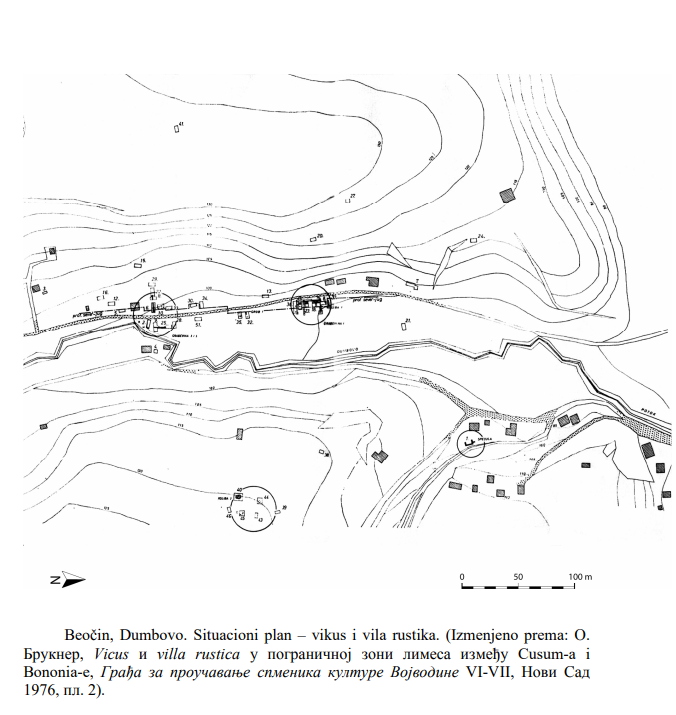
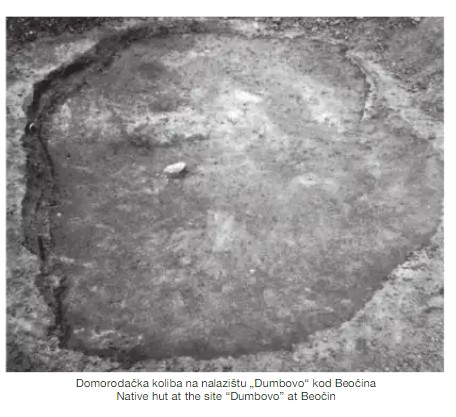
In the valley of Dumbovački Potok on the stretch “Marin do”, there is a multi-layered Roman site, which has been protected since 1967 as a cultural asset. Ager vici Josista existed in the 1st century. The population lived in shallowly dug elliptical huts with rectangular open hearths.
In addition to traditional domestic pottery, parts of imported Italian glass, terrae sigillate and fibulae were also found in the houses. Most of the archaeological material dates back to the Flavian era. A numismatic find of a silver-plated ace Nero Druze from 23-24 was found.
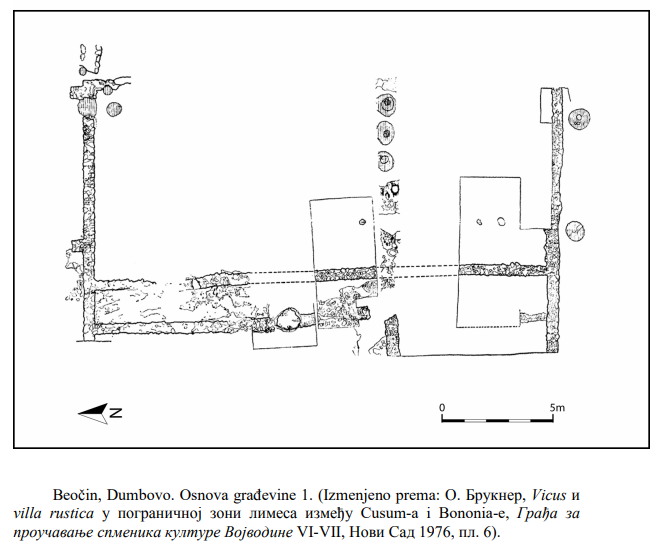
The rustic villa was built in the 4th century in the valley next to the stream while the specula was located on the slope of the hill. Three residential buildings and economic buildings were discovered in the residential horizon of the villa. Movable archaeological material and especially gray ceramics are characteristic of the 4th century. The square-shaped specula, built of pressed and broken stone, serves to protect the population of the villa and prevent the passage of the enemy through the valley into the interior of the province. Archaeological research was carried out from 1972 to 1974.
Maja Đorđević, Archaeological sites of the Roman period in Vojvodina, Republic Institute for the Protection of Cultural Monuments, 2007 Belgrade